
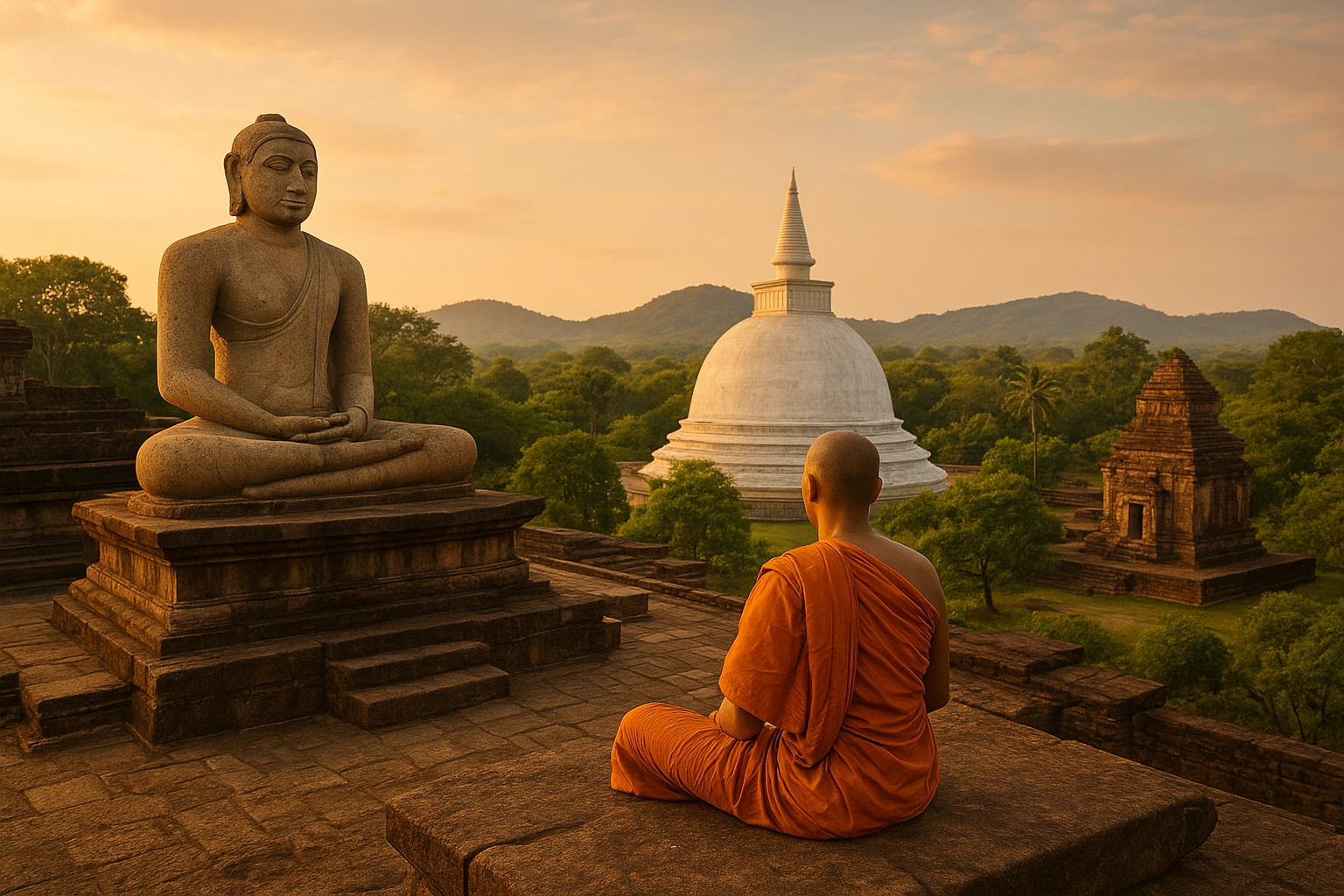
Buddhism in Sri Lanka is one of the most deeply rooted and influential spiritual traditions in the world. For more than 2,300 years, the island’s culture, society, values, architecture, and daily activities have been shaped by Buddhist teachings. Whether exploring Sri Lanka’s ancient ruins, visiting its temples, or learning about meditation, the presence of Buddhism is felt everywhere.
This comprehensive guide covers every major aspect of Buddhism in Sri Lanka — including its origins, teachings, rituals, monastic practices, festivals, architecture, and modern interpretations.
Origins of Buddhism in Sri Lanka
The introduction of Buddhism to Sri Lanka is a foundational chapter in the country’s history. Ancient chronicles record that during the 3rd century BCE, Emperor Ashoka of India sent his son, Arahat Mahinda, as a Buddhist missionary to Sri Lanka. His meeting with King Devanampiya Tissa at Mihintale marks the official beginning of Buddhism on the island.
Early Development of the Religion
After Buddhism’s introduction, it quickly became central to the island’s civilization:
- Monasteries were established across the kingdom.
- Buddhist teachings were preserved and spread among the people.
- Large temples and stupas were constructed by kings.
The ancient capital, Anuradhapura, evolved into an important center of Buddhist study. Sri Lanka eventually became the guardian of the Pali Canon, preserving and transcribing these sacred teachings during the 1st century BCE.
Theravada Buddhism — The Predominant Tradition
Theravada Buddhism is the main form practiced in Sri Lanka. Known as “The Doctrine of the Elders,” this tradition is rooted in the earliest recorded teachings of the Buddha.
Key Elements of Theravada Buddhism
- Focus on the earliest Buddhist scriptures.
- Goal of personal enlightenment through wisdom.
- Ethical behavior and meditation.
- Prominence of monastic life and community support.
- Emphasis on mindfulness and insight.
Theravada teachings revolve around discipline, self-reflection, and the deep understanding of the nature of existence.
Basic Philosophical Concepts
To appreciate Buddhism in Sri Lanka, it is essential to understand its fundamental teachings.
The Four Noble Truths
- Suffering is part of existence.
- Suffering arises from desire and attachment.
- The cessation of desire leads to the end of suffering.
- The Noble Eightfold Path leads to liberation.
The Noble Eightfold Path
This path contains eight interconnected practices:
- Right Understanding
- Right Intention
- Right Speech
- Right Action
- Right Livelihood
- Right Effort
- Right Mindfulness
- Right Concentration
Karma and Rebirth
Karma refers to intentional actions that shape future outcomes. Rebirth is not seen as a reward or punishment but as a continuation influenced by karma.
Impermanence (Anicca)
Everything in the world is constantly changing. Understanding impermanence helps individuals cope with loss and change.
Non-Self (Anatta)
There is no permanent, unchanging self. This teaching encourages detachment from ego.
Buddhism in Daily Life
Buddhism is a living tradition in Sri Lanka, observed through daily actions, rituals, and values.
Morning and Evening Rituals
Many households begin and end their day with simple devotional practices:
- Offering flowers
- Lighting oil lamps
- Chanting verses
These actions foster mindfulness and gratitude.
Observing the Five Precepts
Lay Buddhists often follow these principles:
- Refrain from killing.
- Refrain from stealing.
- Refrain from sexual misconduct.
- Refrain from lying.
- Refrain from intoxicants.
Almsgiving (Dana)
Offering food to monks is a vital practice and a powerful way to cultivate generosity and earn merit.
Meditation Practices
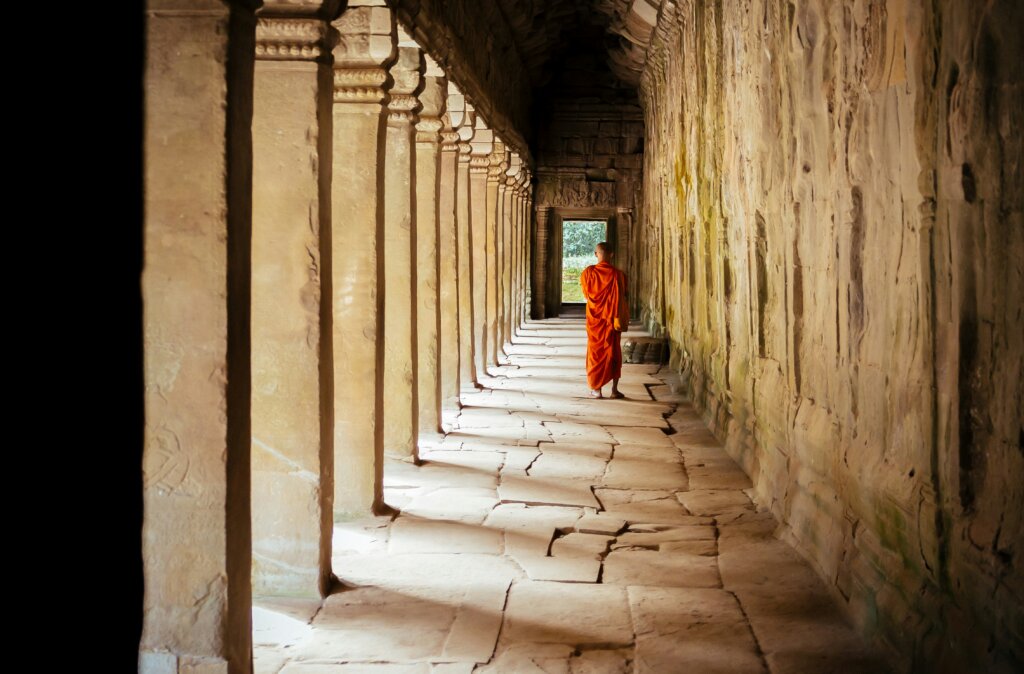
Meditation plays a significant role in Buddhist life. Popular forms include:
- Vipassana (insight meditation)
- Metta (loving-kindness meditation)
Meditation centers across Sri Lanka guide individuals seeking inner peace and self-awareness.
Buddhist Festivals in Sri Lanka
Sri Lanka’s Buddhist festivals highlight spirituality, devotion, and cultural expression.
Poya Days
Each full moon day is a public holiday and a day of reverence. People visit temples, listen to sermons, and observe additional precepts.
Vesak
Vesak, typically in May, commemorates the birth, enlightenment, and passing of the Buddha. Streets light up with lanterns, and families create decorative displays. Free food stalls distribute meals, promoting kindness and generosity.
Esala Perahera
Held annually in Kandy, the Esala Perahera is one of the world’s oldest and most spectacular processions. Traditional dancers, drummers, performers, and monks take part in a long parade honoring the sacred Tooth Relic of the Buddha.
Historic Temples and Sacred Sites
Sri Lanka is home to some of the most significant Buddhist sites in Asia.
Anuradhapura
An ancient city filled with sacred stupas such as Ruwanwelisaya and Jetavanaramaya, which stand as majestic symbols of devotion.
Mihintale
Believed to be the location where Buddhism first arrived in Sri Lanka.
Kandy’s Temple of the Tooth
One of the most sacred Buddhist temples, housing the Tooth Relic of the Buddha.
Dambulla Cave Temple
A complex of caves filled with murals and Buddha statues, representing centuries of artistic heritage.
Polonnaruwa
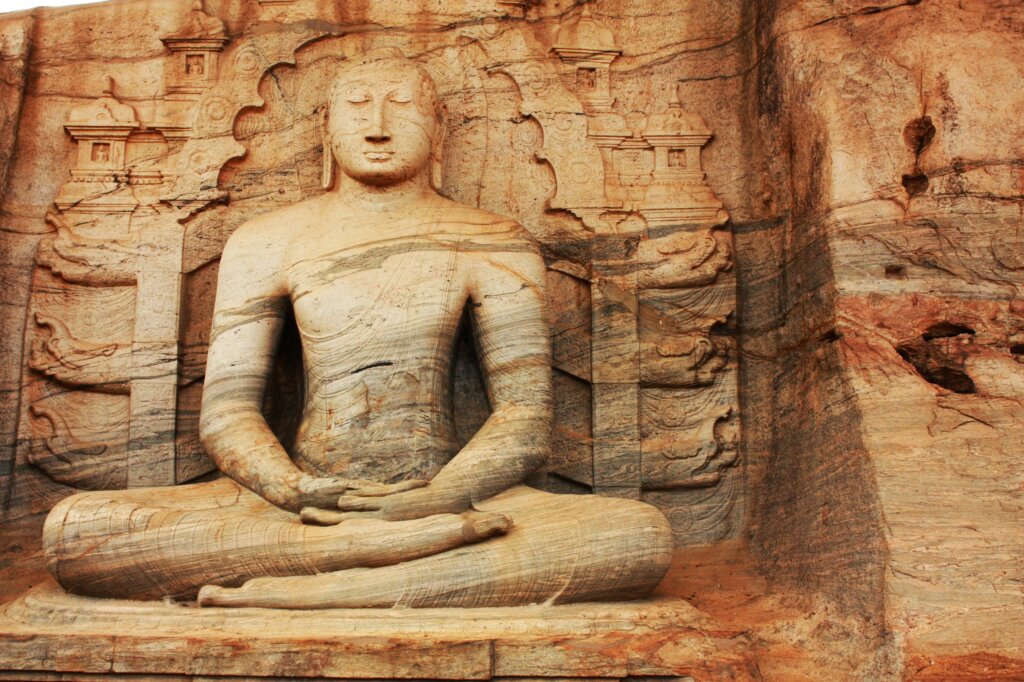
Known for the Gal Viharaya statues carved into granite rock.
The Monastic Life (Sangha)
The monastic community, known as the Sangha, is central to Sri Lankan Buddhism.
Daily Life of Monks
Monks follow a disciplined lifestyle including:
- Early morning chanting
- Meditation
- Scriptural study
- Alms rounds
- Teaching laypeople
Monastic Rules and Training
Monks undertake rigorous training in discipline, meditation, and the study of scriptures. Monastic colleges and universities help preserve Buddhist knowledge.
Buddhism’s Influence on Society
Buddhism shapes social behavior, ethics, and communal identity.
Influence on Social Conduct
Values such as compassion, generosity, and non-violence are deeply rooted in Buddhist teachings.
Education and Governance
Historically, kings were guided by Buddhist principles, promoting welfare, peace, and ethical rule.
Community Welfare
Buddhist influence encourages charitable acts, including community meals and social support programs.
Influence on Arts, Architecture, and Literature
Buddhism has left a lasting mark on Sri Lankan creativity.
Stupa Design
Stupas symbolize deep spiritual meanings and architectural innovation.
Temple Murals
Murals often depict stories from the Jataka tales, which recount the Buddha’s past lives.
Sculptures
Buddha statues carved in rock and bronze demonstrate craftsmanship and spiritual symbolism.
Meditation and Spiritual Practice
Meditation is a core aspect of Buddhist practice in Sri Lanka.
Types of Meditation
- Vipassana: cultivating insight into reality.
- Samatha: training the mind in calmness.
- Metta: developing compassion and loving-kindness.
Meditation retreats in natural environments provide spiritual rejuvenation.
Buddhism and Tourism
Tourism is deeply connected to Sri Lankan Buddhism.
Spiritual Tourism Activities
Visitors can:
- Join meditation programs
- Explore ancient ruins
- Attend temple ceremonies
- Learn about Buddhist art and rituals
Temple Etiquette
Guidelines to follow:
- Dress modestly
- Remove shoes and hats
- Behave respectfully
- Avoid posing inappropriately near statues
Buddhist Influence on Food and Lifestyle
Buddhist teachings influence diet and daily habits.
Food Practices
Many people eat vegetarian meals on sacred days.
Lifestyle Principles
- Simplicity
- Mindfulness
- Calm behavior
- Respect for all beings
These principles contribute to a peaceful social environment.
Challenges and Modern Transformation
Buddhism in Sri Lanka continues to evolve while facing modern issues.
Current Challenges
- Preservation of heritage sites
- Over-commercialization of festivals
- Adapting ancient teachings to modern realities
Sri Lanka’s Contribution to Global Buddhism
Sri Lanka has played a significant role in spreading Buddhism across the world. Monks from the island travel internationally, establishing temples and teaching meditation. The Theravada tradition from Sri Lanka influences global Buddhist communities.
Conclusion
Buddhism in Sri Lanka is not just a religion but a cultural foundation that influences every aspect of life. With its ancient temples, meditation practices, festivals, and spiritual values, Buddhism continues to shape the identity of the nation. Through centuries of history, it remains a living tradition that offers wisdom, peace, and guidance to all who seek it.